
01 · Neuro Signature System
N.S.S. for BEOS
Brain Electrical Oscillation Signature profiling. The instrument that detects whether a person remembers taking part in an event.
02 · The basis · Memory
Remembering is not the same as knowing.
The brain stores an experience it took part in differently from a fact it read or heard. BEOS looks for the signature of that first-hand experience: Experiential Knowledge.
03 · The basis · Auditory pathway
One sentence. Nine stages. Every stage tracked.
A probe is a short first-person sentence played to the subject. The system follows its processing from the ear to remembrance.
- 01Ears hear the probe
- 02Sound becomes electrical impulses
- 03Impulses reach the auditory region
- 04Impulses are processed
- 05Words are identified
- 06Words become sentences
- 07Sentences derive meaning
- 08Meaning triggers processing
- 09Processing triggers memories
04 · The technology · Classification
Each probe is classified by the neural process it evokes.
Time- and frequency-domain analysis of the oscillations after every probe. Experiential Knowledge is the fourth stage.
- 01InattentionProbe not registered
- 02Primary processingHeard and registered
- 03EncodingMeaning processed
- 04Encoding++Attention turns inward · source memory accessed
- 05Experiential KnowledgeMemory trace retrieved
- 06Emotional responseArousal during recall
05 · The test · Under one hour
Cap on. Eyes closed. Just listen.
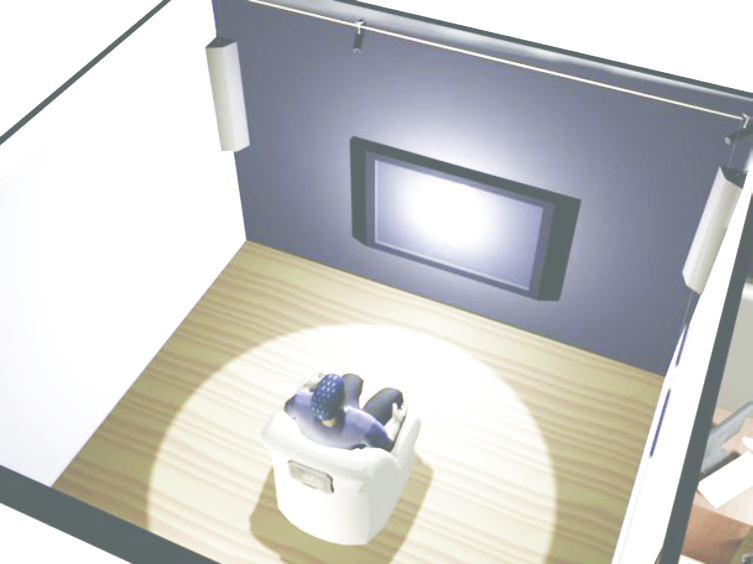
The subject sits alone in a quiet room wearing the sensor cap, connected to a battery-powered Signal Processing Unit isolated by fibre optics.
- 01Fit the sensor capWorn like a swimming cap
- 02Baseline · eyes closed3 min
- 03Baseline · eyes open3 min
- 04Auditory probesStory-like narrative
- 05Automated analysisNo human intervention
- 06ReportPrinted · tamper-proof
06 · The lab · NFSU Gandhinagar
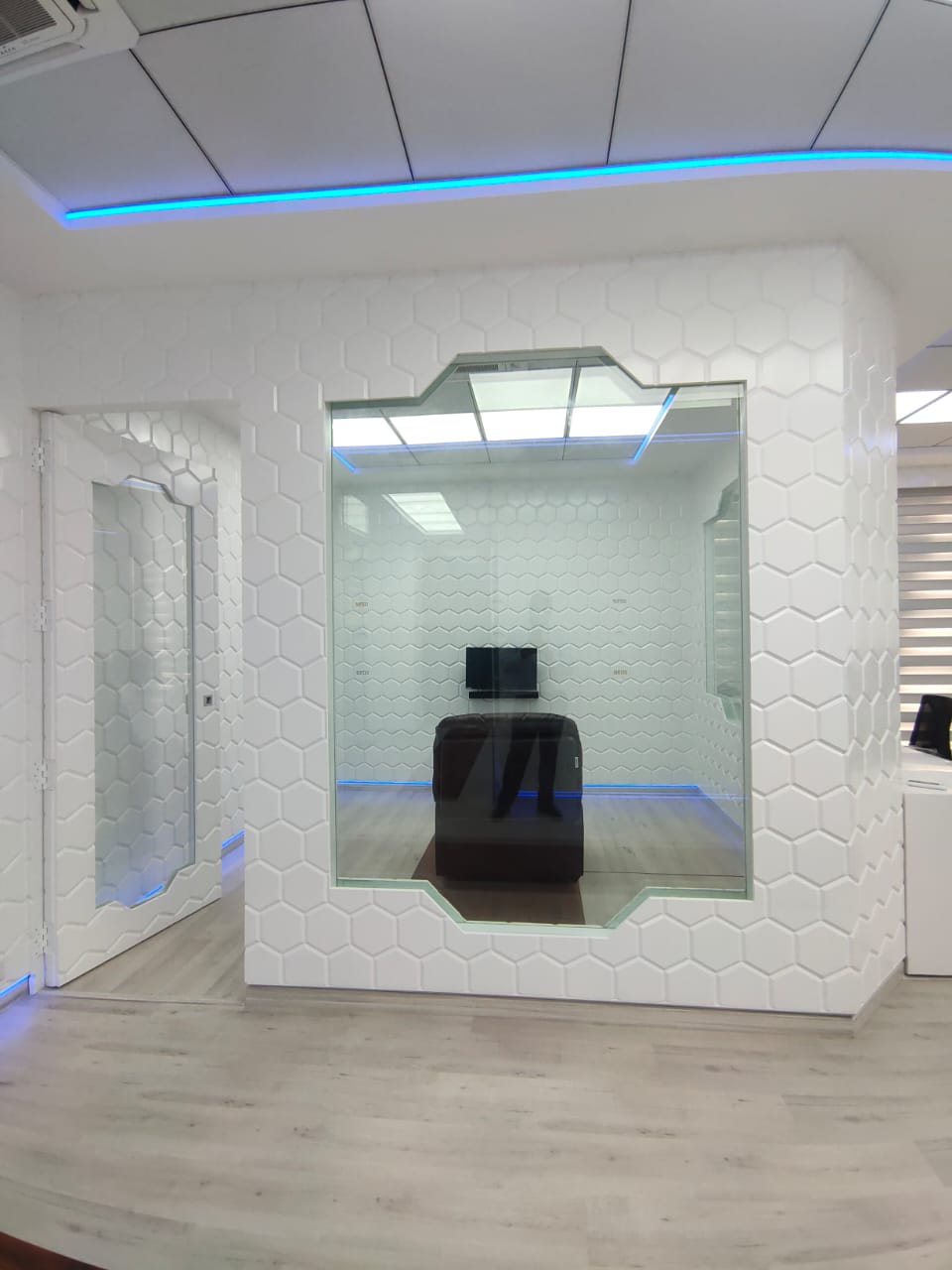
A lab built for silence.
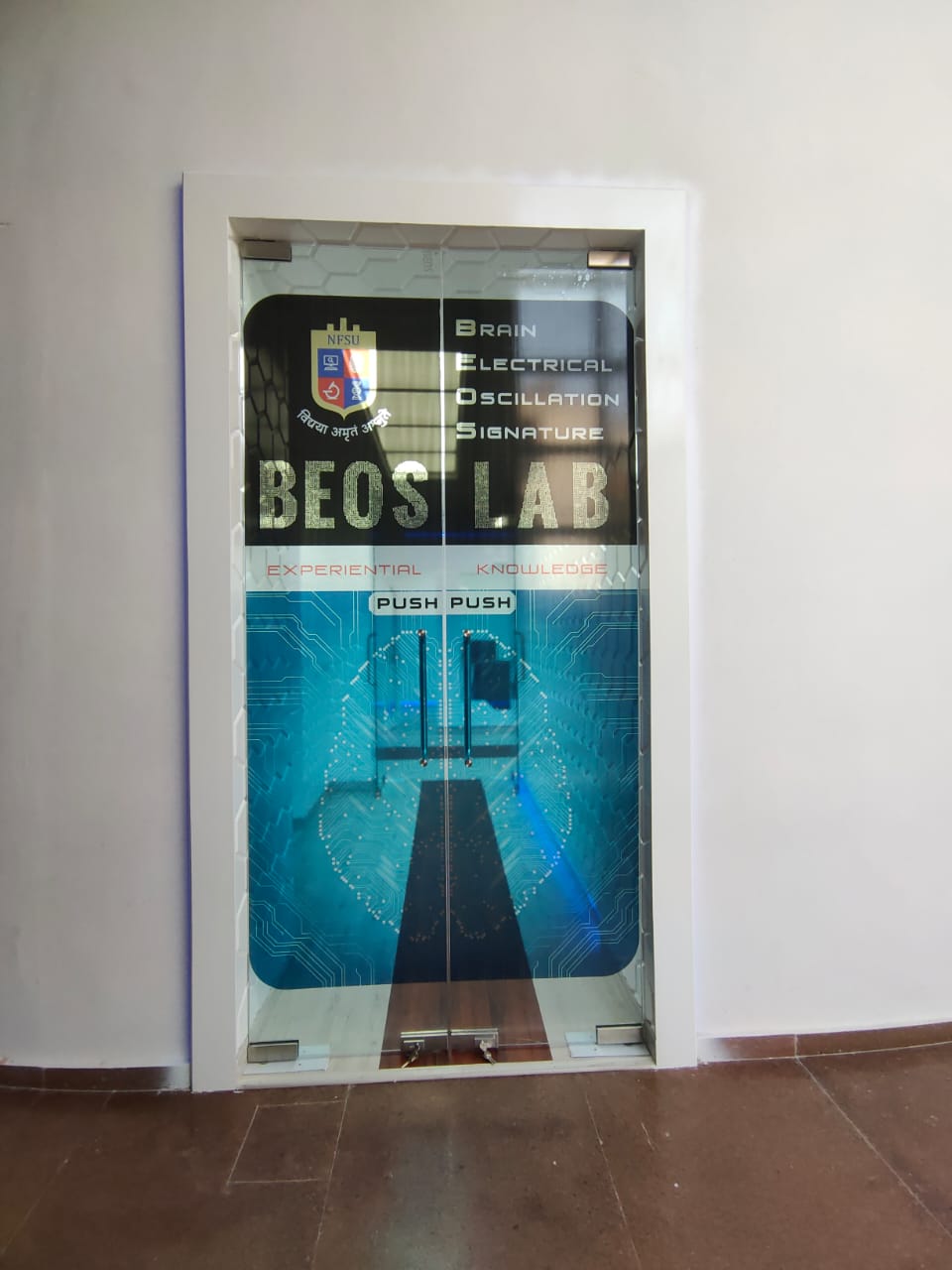
A sound-treated subject room, an observation window and the examiner's console: the BEOS laboratory at the National Forensic Sciences University, Gandhinagar.

07 · The report · Scenarios
Scenarios, not single probes.
Related probes are grouped into Scenarios of five to ten. A Scenario is significant when two or more probes carry Experiential Knowledge.
08 · Validated · Field-proven
In service since 2003.
Independently validated by a Government of India study. Used by government forensic laboratories, with reports submitted to courts as corroborative evidence.